Ghalib vs Iqbal: Two Giants of Urdu Poetry Compared
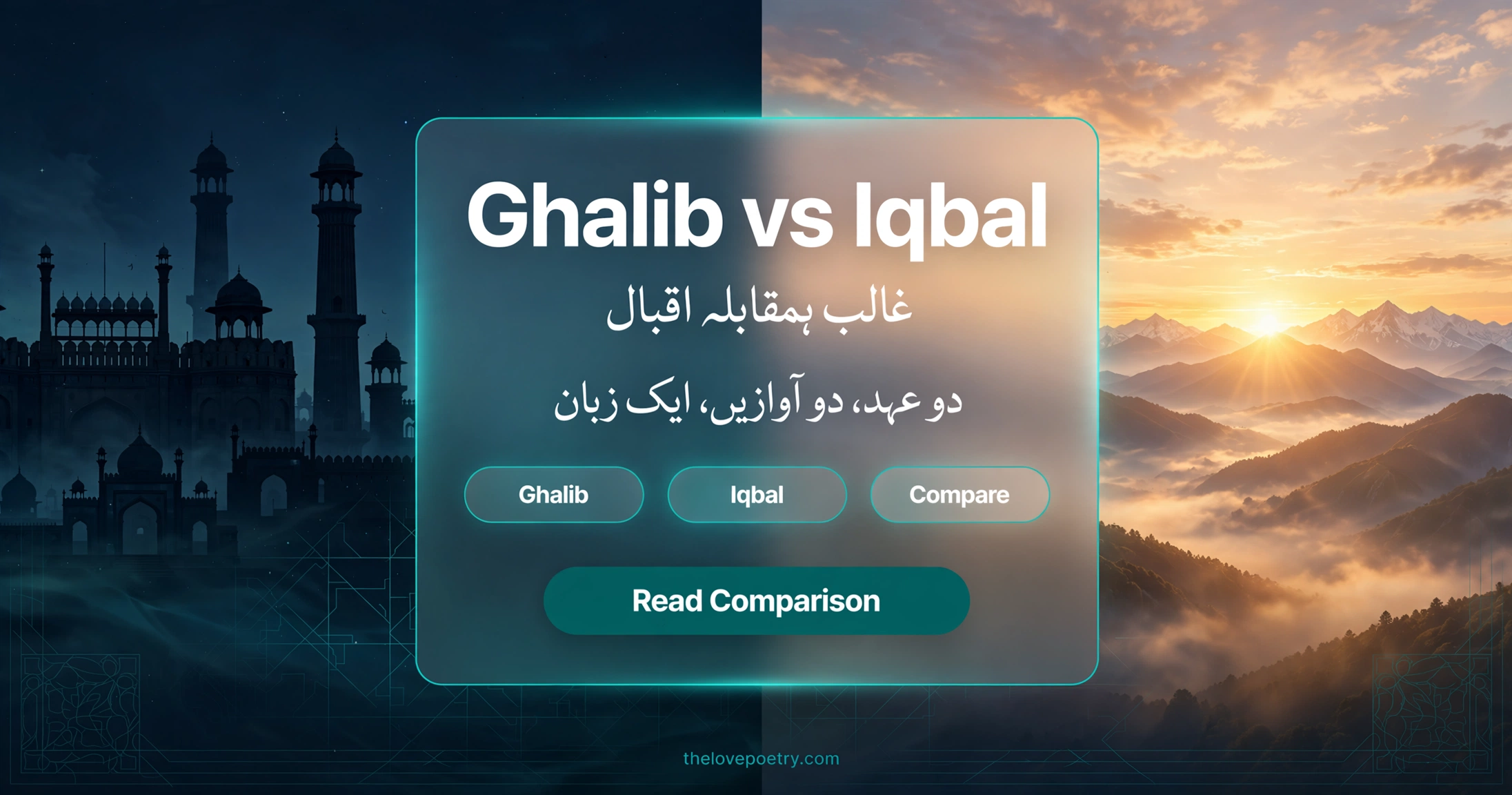
Ask any Urdu poetry lover to name the two greatest poets, and you will hear the same two names: Mirza Ghalib and Allama Iqbal. Then ask who was greater — and watch the room divide. This Ghalib vs Iqbal comparison settles nothing (that is the fun of it) but explains everything: two eras, two temperaments, two completely different ideas of what poetry is for.
Quick Answer: Who Was Greater — Ghalib or Iqbal?
There is no winner in Ghalib vs Iqbal — only different greatness. Ghalib (1797–1869) perfected the art of the sher: wit, irony, and philosophical depth in two lines. Iqbal (1877–1938) weaponized poetry: his verse aimed to awaken nations. Read Ghalib to understand the human heart; read Iqbal to set it on fire.
Two Eras, Two Worlds
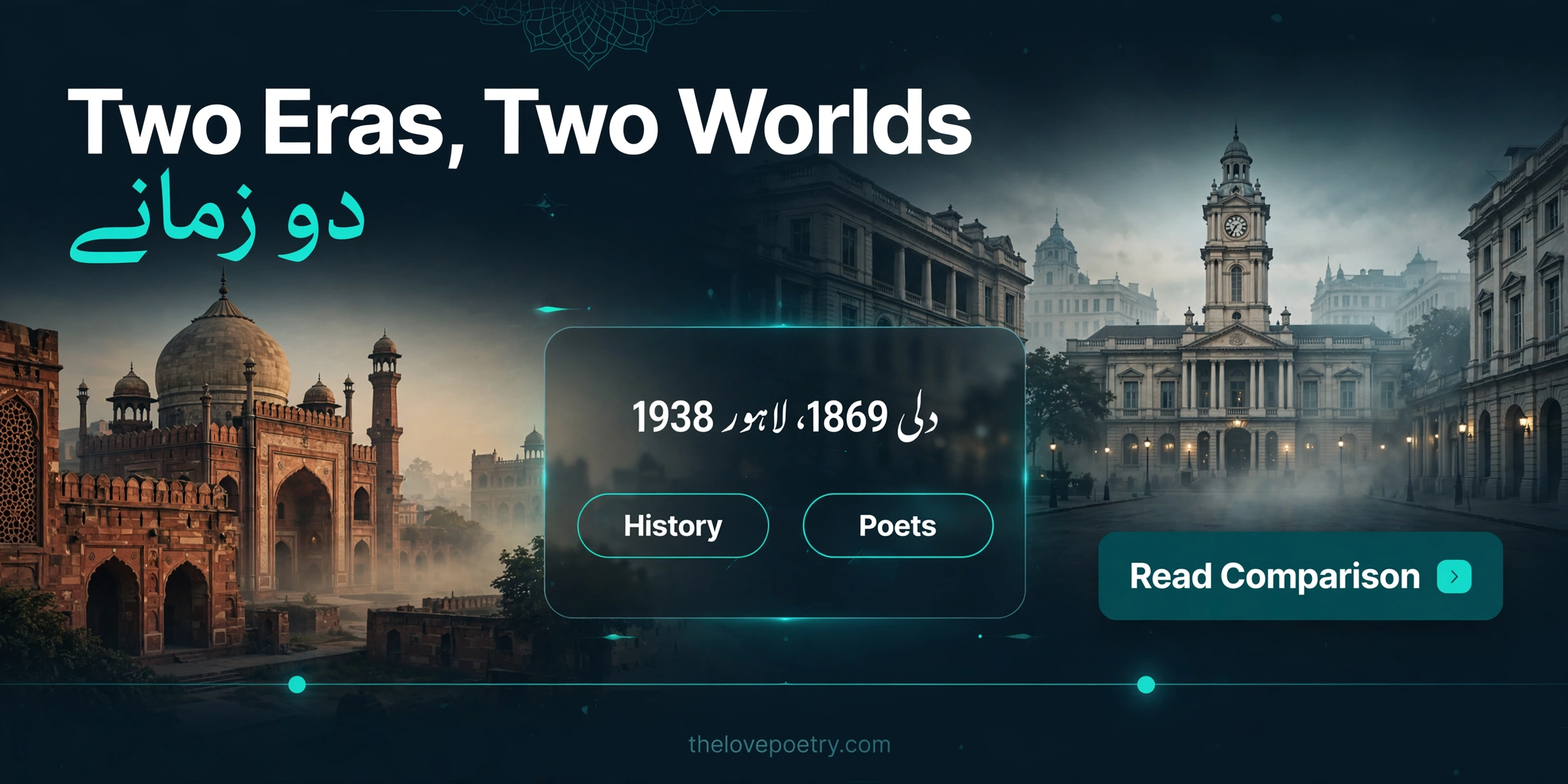
Ghalib lived through the slow collapse of Mughal Delhi. He watched an empire — and a way of life — crumble around him, and his poetry carries that elegant grief. His world was the mushaira, the court, the beloved’s lane. Everything he wrote feels personal, even when it is cosmic.
Iqbal was born eight years after Ghalib died, into a world of colonized nations and sleeping Muslims. He studied in Cambridge and Munich, then returned with a mission: poetry as awakening. Where Ghalib looked inward, Iqbal looked outward — at history, at destiny, at what his people could become. Understanding their times is the first step in any honest Ghalib vs Iqbal debate.
Style: The Wit vs The Fire
Ghalib’s genius is compression. He takes a vast thought — desire, mortality, the cruelty of fate — and folds it into two lines so tight they hum. His tone is ironic, playful, devastating, often all three at once. You read Ghalib and feel cleverer for having understood him.
Iqbal’s genius is expansion. His lines open outward like wings. He does not whisper to the individual heart; he addresses nations, youth, history itself. Reading Iqbal feels less like solving a riddle and more like hearing a call to stand up straighter.
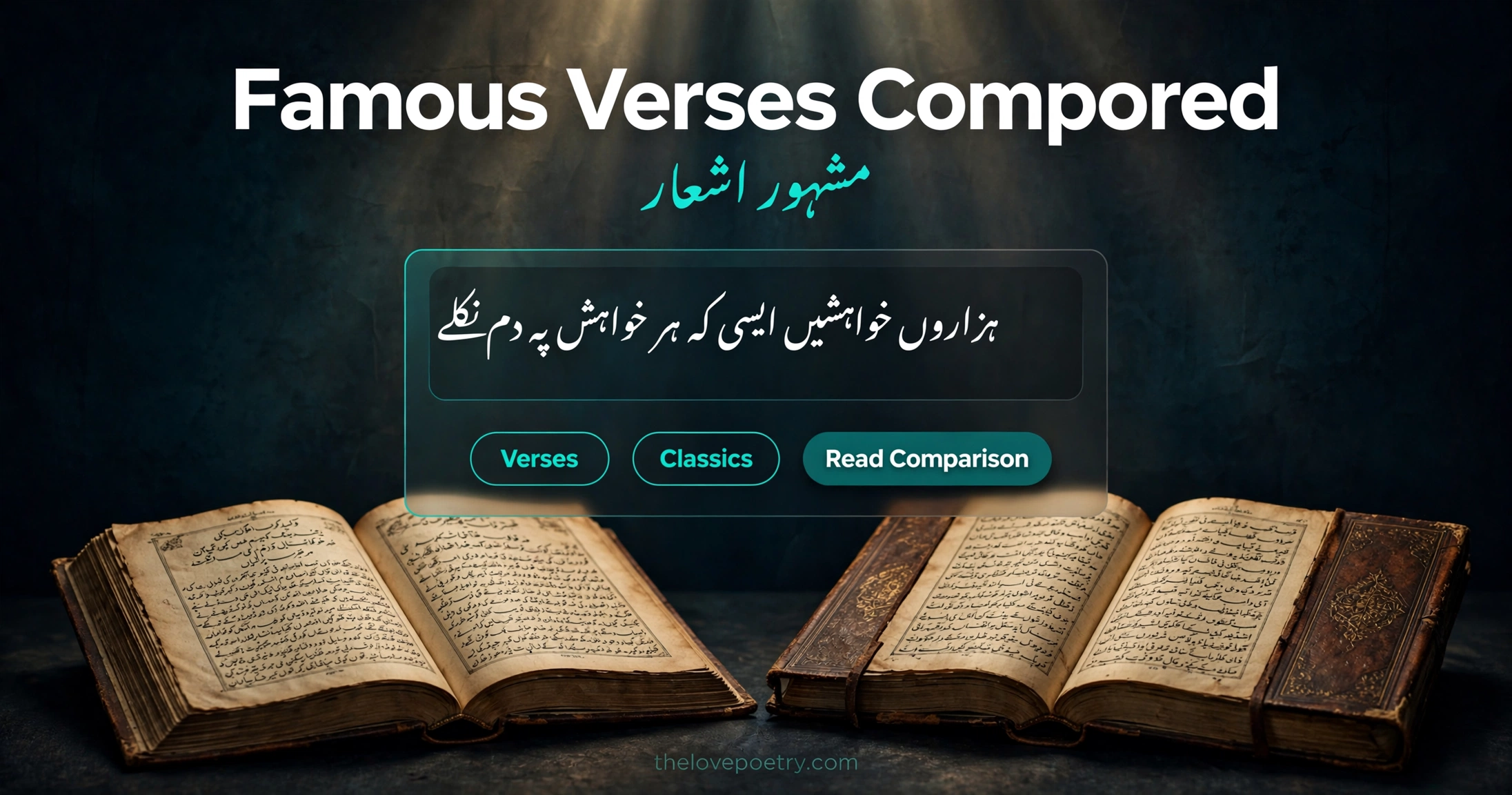
Here they are, face to face — two of the most famous shers in the language:
ہزاروں خواہشیں ایسی کہ ہر خواہش پہ دم نکلے
بہت نکلے میرے ارماں لیکن پھر بھی کم نکلے
خودی کو کر بلند اتنا کہ ہر تقدیر سے پہلے
خدا بندے سے خود پوچھے بتا تیری رضا کیا ہے
Feel the difference? Ghalib turns inward on unfulfilled desire; Iqbal turns outward toward self-creation. Same language, opposite gravities.
Two more lines make the contrast even sharper. Ghalib, teasing the foolish heart: “dil-e-nadan tujhe hua kya hai / aakhir is dard ki dawa kya hai.” Iqbal, scolding the complacent one: “sitaron se aage jahan aur bhi hain / abhi ishq ke imtihan aur bhi hain.” One poet diagnoses the wound with a smile; the other prescribes the cure with thunder.
Ghalib vs Iqbal: Side-by-Side Comparison
| Aspect | Mirza Ghalib | Allama Iqbal |
|---|---|---|
| Era | 1797–1869 — late Mughal Delhi | 1877–1938 — colonial era, awakening |
| Language | Persian-rich, layered, ironic | Powerful yet more accessible Urdu |
| Core themes | Love, loss, fate, wit | Selfhood (khudi), faith, nation |
| Tone | Intimate, playful, melancholic | Grand, urgent, prophetic |
| Famous for | The perfect sher | Shikwa, khudi philosophy |
| Best for beginners? | Rewarding but demanding | Bang-e-Dra is a great entry point |
What the Critics Say
Literary history has largely settled into a graceful compromise: Ghalib is considered the unsurpassed master of the ghazal form itself — no one has packed more meaning into two lines — while Iqbal is considered the greater force, the poet whose ideas traveled beyond literature into politics, philosophy, and national identity. Critics who love craft vote Ghalib; critics who love impact vote Iqbal. The rest of us get to enjoy the argument forever.
There is also a lovely historical footnote: Iqbal himself wrote admiringly about Ghalib, acknowledging the elder poet’s supremacy in the ghazal even as he chose a different path. The student honored the master — which tells you that the “vs” in Ghalib vs Iqbal was invented by fans, not by the poets.
Who Should You Read First?
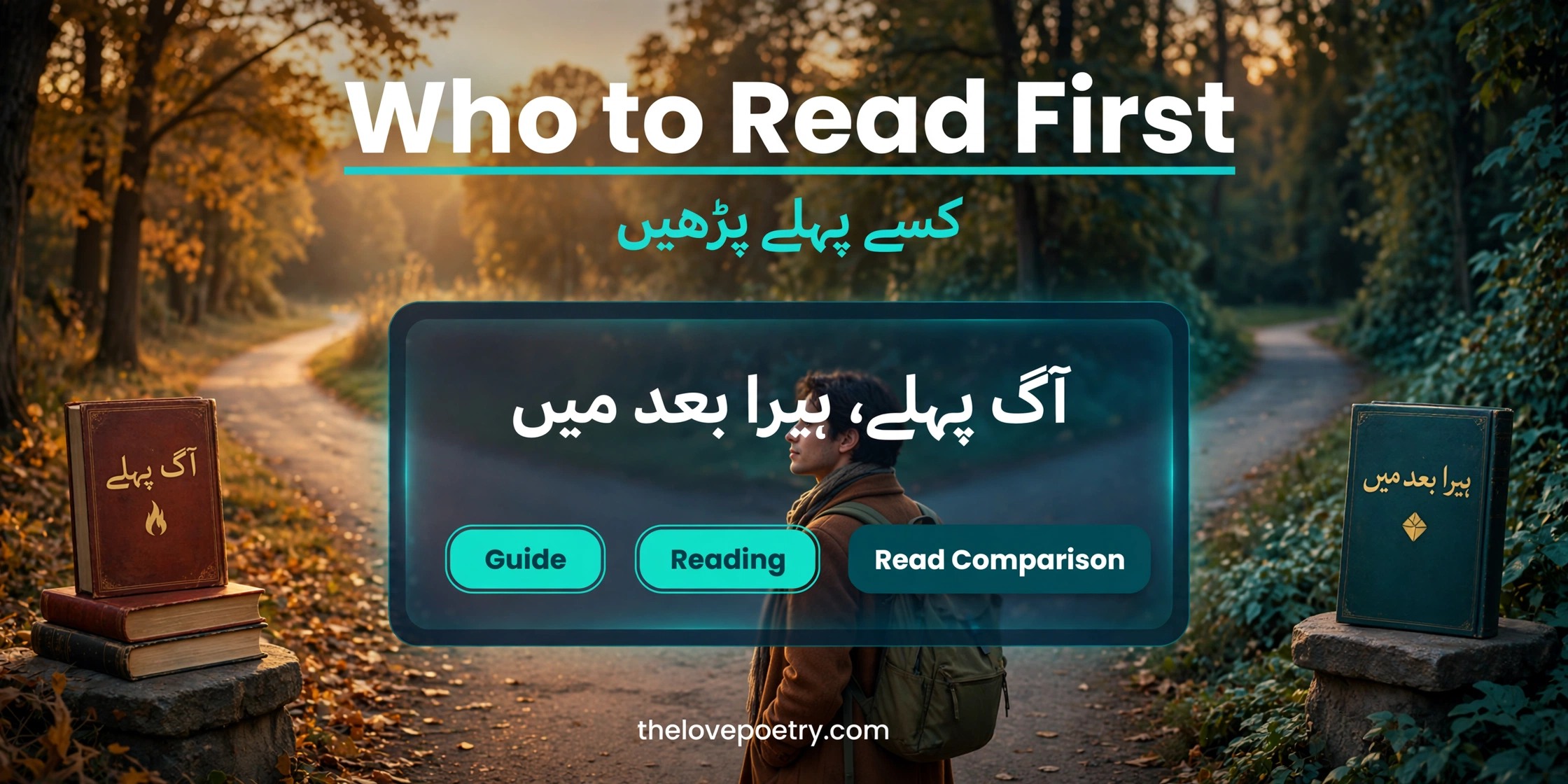
Be honest about your temperament. If you love puzzles, irony, and lines that reveal new meanings on the tenth reading — start with Ghalib, slowly, five shers a day. If you want poetry that moves you to action, that makes your chest expand — start with Iqbal’s Bang-e-Dra.
And here is a secret the debaters will not tell you: you do not have to choose. Most lifelong readers carry both — Ghalib for the lonely nights, Iqbal for the mornings when they need to rise. The Ghalib vs Iqbal question is not a verdict; it is a doorway with two arches.
Practically speaking, here is a reading order that works: spend one month with Iqbal’s Bang-e-Dra to build momentum and confidence, then spend three slow months with Ghalib’s divan. The fire first, then the diamond-cutting. Many readers who try Ghalib first bounce off his difficulty and never return — Iqbal first gives you the stamina for Ghalib later.
Key Takeaway
In the Ghalib vs Iqbal debate, remember this: Ghalib perfected what a sher is; Iqbal expanded what a sher is for. One mapped the human heart, the other tried to move history. Read both — in that order, or the reverse. Just read both.
Continue the journey: dive into Mirza Ghalib poetry and Allama Iqbal poetry, sharpen your taste with deep poetry, and see our best Urdu poetry books guide to build your shelf. For the original divans, visit Ghalib’s Rekhta profile.
Frequently Asked Questions
Conclusion
Ghalib vs Iqbal will be debated as long as Urdu is read — and that is exactly as it should be. Ghalib teaches you to look closely at a single human heart; Iqbal teaches you to look boldly at history. Start with whichever calls to you, but do not stop at one. The full sky of Urdu poetry needs both its stars. Explore Ghalib’s verses and Iqbal’s verses in our collections, and decide for yourself.